
A Glance at Intelligence
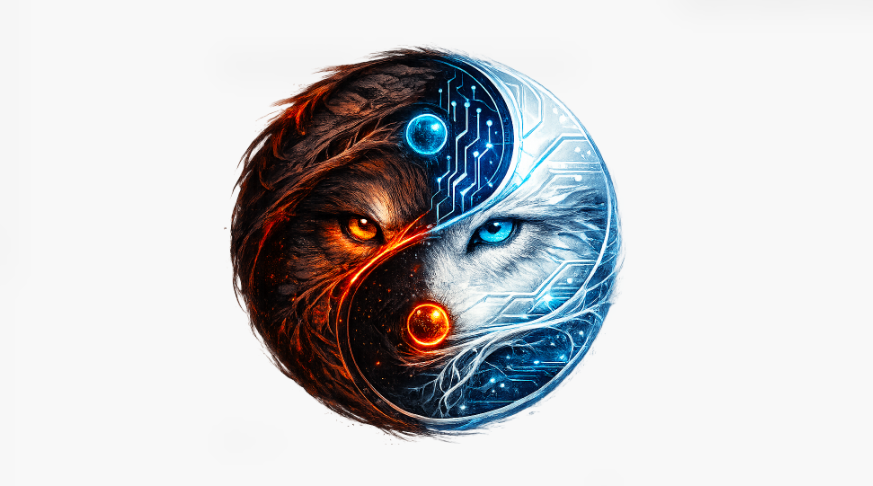
The common mistake shared by more than eight billion people alive today is believing that we are smarter than our ancestors. Each new generation belittles the previous one; this is also fed by the cliché of elders saying, “Young people these days—were we like this at their age?”, forming a kind of love–hate relationship. This condescension runs so deep that we marvel at how Nikola Tesla or Einstein could have been so intelligent, and the construction of the Pyramids leaves us all astonished—when the margin of error between the angles is less than a centimeter and no technical equipment had even been invented! Taking it further, we have those who search for evidence of aliens in hieroglyphs, and our science enthusiasts who bring to light helicopters of vanished civilizations! In fact, without realizing it, the intelligence that built civilizations is openly underestimated.
Perhaps the mistake is positioning intelligence on its own. Opposite it stands a massive counterweight: instinct.
In one of his programs, Neil deGrasse Tyson said something along the lines of, “We solve many problems, but we still haven’t understood why intelligence exists; perhaps humans are a tool for intelligence.” He made a reference to intelligence being superhuman and needing to set out on interstellar travel for its true purpose. When he made this statement, artificial intelligence was not yet so present in our lives.
Like Tyson, many think that humans are a tool, and intelligence is a purpose whose exact use it does not know. This point drifts somewhat away from science and resembles philosophically unsolvable Zen riddles: “If a tree falls in a forest and there is no living being to hear or see it, did a tree really fall?”
When wild life is considered, what truly matters is instinct. A wolf does not enter a conflict without reason; if it is injured, it becomes weak and turns into prey. When it is hungry, it heads toward a safe source. With its intelligence, it analyzes the risk and outcome of conflict when facing prey. In a forest, for a predator, there is no care, no dressing, no painkillers, no stopping bleeding, no help. All of these are part of a civilization shaped by intelligence; the wolf does not know them, but it knows that if it makes a mistake, it will die. Before building civilization, humans survived for very long years thanks to their instincts.
We sometimes say there is “no pain, no gain.” A metaphor valid only for civilization. A wolf holding such a belief would have no chance at all. Humans, however, push this boundary unconsciously within civilization. The human who looks at hieroglyphs and sees aliens easily contradicts themselves in the decisions they make.
Perhaps we value intelligence too much; it may be instinct that cannot adapt to the civilization on whose shoulders it rises. Imagine instinct watching you with jealousy from a crack in the door while you play with intelligence. The results would be massacres, wars, and wrong decisions made for individual interests. Sound familiar?
Stay in the moment.